Go beyond the genome – and the brain – in discovery of CNS disease biomarkers & targets.
Neurodegenerative diseases are driven by complex biological processes that unfold over years, spanning neuronal dysfunction, neuroinflammation, metabolic dysregulation, and systemic contributions outside the central nervous system. While genetics and imaging provide important context, they often fail to explain why patients with similar risk profiles experience markedly different disease trajectories and therapeutic responses.
Sapient’s approaches to identifying biomarkers and targets for CNS disease directly measure the dynamic molecular layers that read out neurodegeneration via protein, metabolite, lipid, and cytokine profiling – including non-invasive capture of CNS‑derived biology from blood.
Key neurodegenerative research questions we help answer:
How do CNS‑originating signals differ among patients with similar genetics or imaging findings?
How does peripheral inflammation and metabolism interface with CNS disease pathology?
Which targets actively modulate disease processes rather than statically predict risk?
Which molecular pathways driving neurodegeneration are detectable in blood for non-invasive monitoring?
Identify CNS disease‑modifying targets targets rooted in functional neurobiology rather than inferred from genetics alone, and leverage our DynamiQ™ molecular-clinical database to confirm key findings.
Deep phenotyping for patient stratification.
Dechiper functional differences among patients who appear similar based on genetics, imaging, or clinical presentation, revealing distinct disease mechanisms that inform more precise target selection.
Mechanistic insights to map response & resistance.
Leverage non-invasive sampling to longitudinally evaluate biomarkers and therapies by tracking pathway engagement, neuroinflammatory signaling, and metabolic changes with treatment exposure.
Translational de-risking.
Ground CNS targets and markers in human-relevant evidence by validating their associations with disease state and progression across independent cohorts in DynamiQ before advancing programs.
Next-gen approaches to comprehensively profile the system-wide effects of CNS diseases.
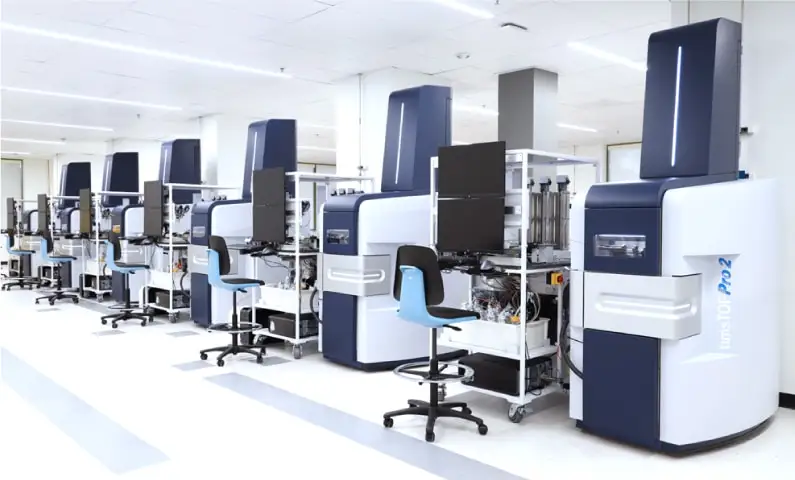
We leverage our innovative mass spectrometry-based platforms alongside ultra-sensitive NULISA assays to capture the breadth of CNS disease biology. These include:
CSF Proteomics
This robust workflow measures 3,600+ protein groups in CSF, including neurofilament and tau proteins as well as thousands of additional biomarkers central to CNS diseases.
Extracting deep biological insights with CSF proteomics
See how Sapient not only on generates robust proteomics data from CSF samples, but also leverages it for key actionable insight – annotating hundreds of key pathways and processes to map proteins across core signaling pathways and cascades involved in neurodegeneration.
DynamiQ is Sapient’s longitudinal molecular‑clinical data resource, built from tens of thousands of deeply phenotyped human samples. Once biomarkers or targets are identified in your study, DynamiQ enables:
Cross-validation of blood‑detectable CNS targets and biomarkers in independent cohorts – including patients with Alzheimer’s Disease, Parkinson’s Disease, and dementia
Biological contextualization of observed molecular signals across CNS disease states and progression timelines
Exploration of relationships between targets, treatment exposure, and clinical outcomes
Connect with our scientists to discuss your neurodegeneration programs. Sapient can help you identify biomarkers and targets for CNS disease that are biologically grounded and positioned to translate – using blood‑based molecular insights to illuminate the biology of the brain.