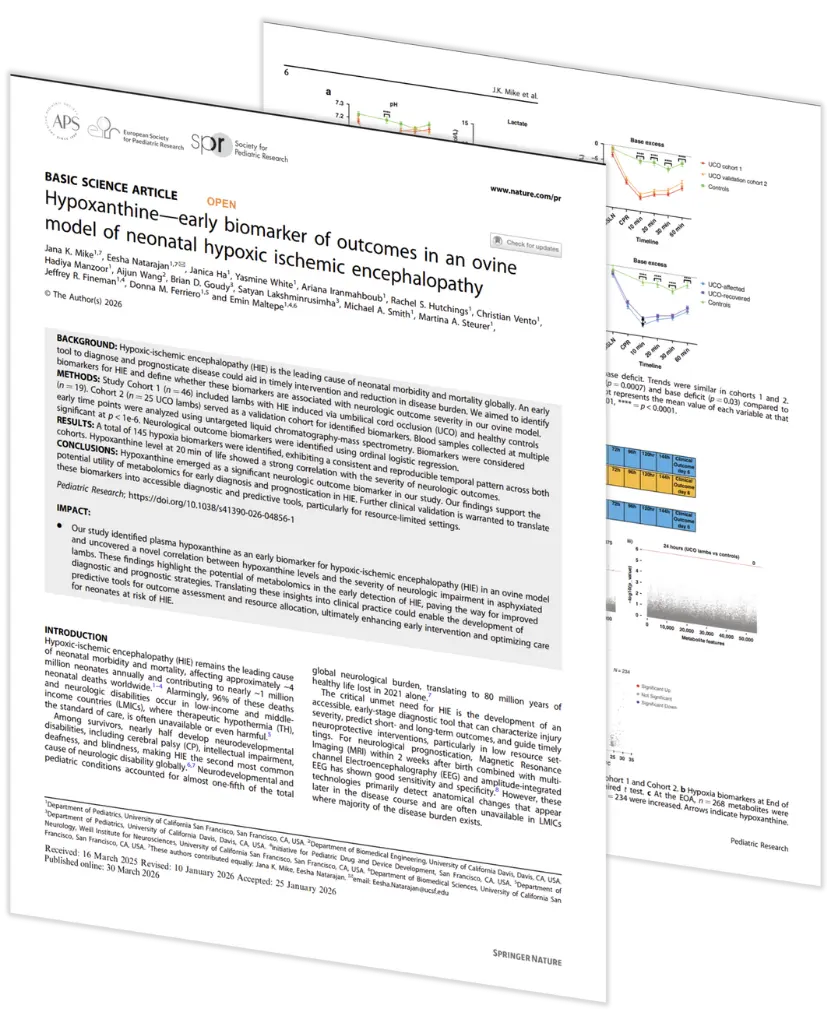
For the study, researchers analyzed plasma samples collected at multiple early time points from lambs subjected to hypoxic‑ischemic injury via umbilical cord occlusion, alongside healthy controls and an independent validation cohort. Samples were analyzed via Sapient’s untargeted LC-MS method for broad metabolome profiling, with the goal of identifying metabolic biomarkers of hypoxic-ischemic injury, characterizing their temporal progression, and determining their association with injury severity and neurologic outcomes.
A total of 145 hypoxia biomarkers were identified, showing consistent and reproducible temporal pattern across both discovery and validation cohorts. Hypoxanthine emerged as a key biomarker, with plasma levels measured at 20 minutes of life strongly correlating with neurologic outcome severity. Elevated hypoxanthine reflected early purine metabolism disruption, consistent with hypoxic energy failure and oxidative stress.
While characterizing the temporal dynamics of plasma hypoxanthine, it was found to be an early biomarker showing significant increase within 1 hour following ischemic injury.
These findings contribute to a growing body of evidence supporting the use of hypoxanthine as a potentially clinically useful biomarker following various hypoxic-ischemic states including HIE – and demonstrate the power of untargeted metabolomics analysis as an approach to identifying early biomarkers for prognostication of disease in addition to disease diagnosis.
To learn more, read the full paper and findings.